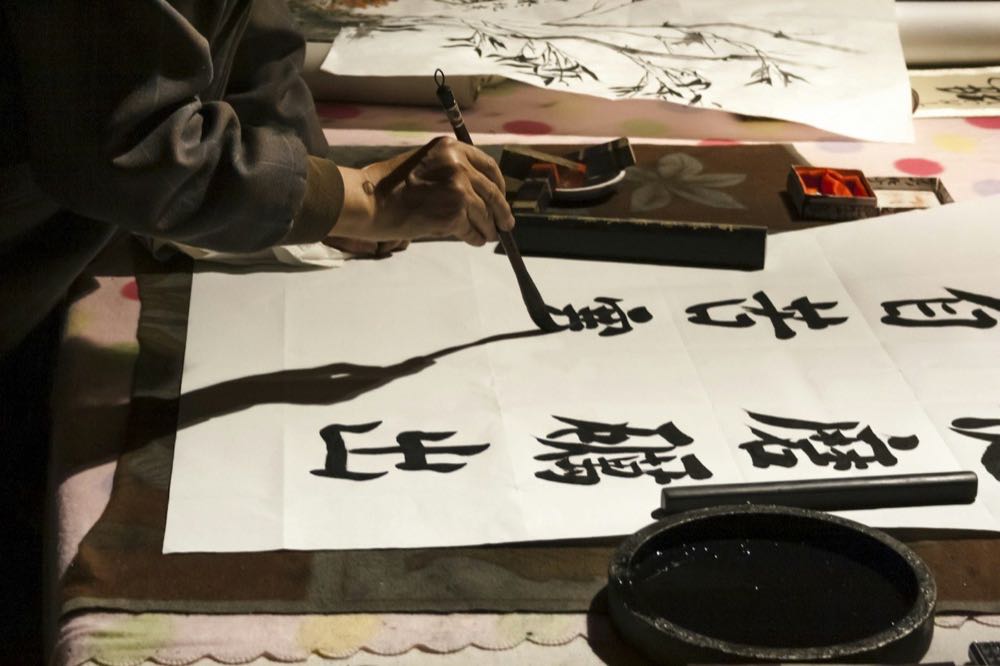
BaZi means "eight characters." It is the Chinese system that reads your fate from four pillars — year, month, day, and hour of birth — each pillar carrying a Heavenly Stem and an Earthly Branch. Eight characters in total. From them, a trained BaZi practitioner can read your temperament, your timing, your relationships, your career trajectory, and the lessons your life will probably make you confront whether you want to or not. It is the system the Chinese ruling class consulted for two thousand years before making major decisions. It is still consulted today, by people who run companies, by people who are deciding whether to marry.
The detail Western astrology cannot match is the Day Master — the Heavenly Stem of the Day Pillar. This is the element you are made of: Yang Wood, Yin Wood, Yang Fire, Yin Fire, Yang Earth, Yin Earth, Yang Metal, Yin Metal, Yang Water, or Yin Water. Ten possibilities. Your Day Master describes how you fundamentally show up in the world. It is not a personality archetype. It is closer to a material truth.
Yang Wood is not a metaphor
If your Day Master is Yang Wood, you are the great tree. You grow upward. You need light, you need to lead, you cannot be confined to a small pot. You are, in BaZi terms, fundamentally generative — you make things grow, you support what climbs you, and you suffer when you are pruned. You will read this and feel either deeply recognized or strangely defensive. Yang Wood people, in my experience, almost always recognize themselves immediately. They have spent their whole lives wondering why nobody else seems to think the world is for growing.
Yin Water is the opposite material. Yin Water is mist, dew, the kind of water that softens stone over centuries. Yin Water people do not push. They infiltrate. They are usually mistaken for shy when in fact they are deeply perceptive and waiting. Yin Water Day Masters often become the people everyone goes to with secrets, because they know how to hold the shape of what was given to them without forcing it.
Each of the ten Day Masters has a distinct way of meeting the world. Yang Metal is the sword — direct, cutting, demanding precision. Yin Metal is the jewel — also metal, also valued, but adorning rather than cutting. Yang Earth is the mountain. Yin Earth is the field. Yang Fire is the sun; Yin Fire is the candle. These are not vague poetic equivalences. In BaZi, they predict — with surprising accuracy — what people will do when they are tired, what they do when they are stressed, and what work they will find meaningful.
The 60-year cycle, and the year you are in now
BaZi also reads luck cycles — ten-year periods that shift the elemental environment around you. You are not the same person at 28 and 38, not because your Day Master changed (it never does), but because the elements around your Day Master shifted. A Yang Wood person in a Water luck cycle is well-watered, growing fast, often unstable from too much growth. The same Yang Wood person in a Metal luck cycle is being pruned, often painfully, often productively. The Day Master does not change. The conditions do.
This is what your Western horoscope cannot tell you. Transits in Western astrology give you something similar — Saturn returns, Pluto squares — but they are read against your natal chart as events, not as changes in the material conditions of your soul. BaZi reads the relationship between you and the time you are in as a question of elemental balance: too much, too little, helpful, harmful. It is the system that gives you instructions about this year, not just predictions about it.
Reading BaZi alongside the Western chart
BaZi and the Western chart agree more often than people expect, but they read different layers. The Western chart describes your psychology — what you think, what you fear, who you are drawn to. BaZi describes your material — what you are made of, what climate you thrive in, what conditions will press your edges. A complete reading reads both, and notices where they overlap and where they diverge. The overlaps confirm. The divergences are usually the most interesting part of the chart — they are where two traditions are disagreeing about you, which is almost always where something real is hidden.