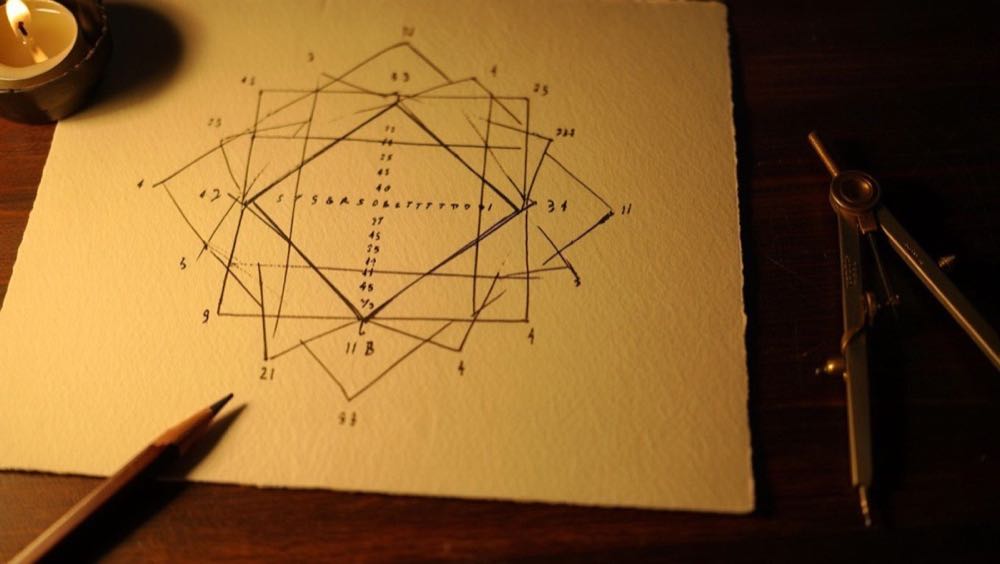
If your feed has shown you an eight-pointed star chart with numbers at every corner and talk of "karmic tails" and "money lines," you've met the Matrix of Destiny. It is one of the fastest-growing symbolic systems of the 2020s — and one of the least explained. Most content about it either sells you a reading or dismisses it in a sentence.
This is the explainer we wished existed: what the Matrix of Destiny actually computes, how that differs from what Western astrology computes, and what each can and cannot tell you.
What the Matrix of Destiny is
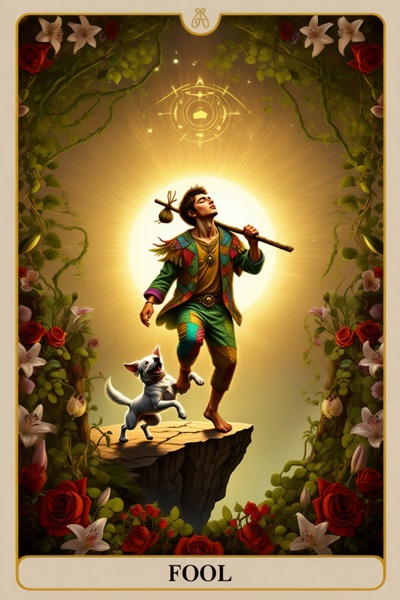
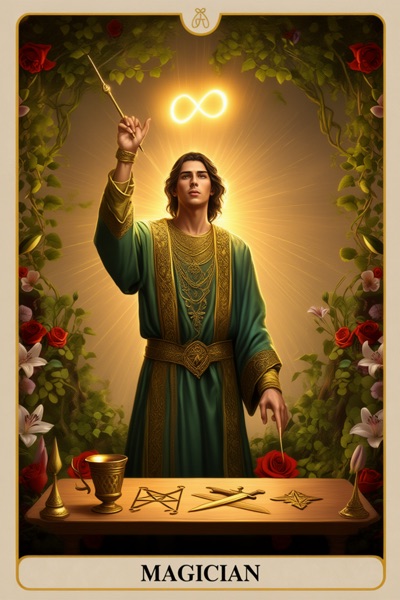
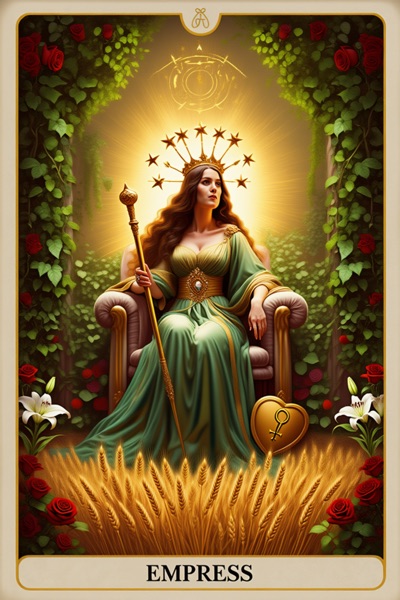
The Matrix of Destiny (also "Destiny Matrix") is a modern method, popularized in the late 2000s by the Russian-language school of Natalia Ladini, that reduces your birth date through simple arithmetic into numbers from 1 to 22 — and reads each number as one of the 22 Major Arcana of the tarot. The results are arranged on an eight-pointed star: personal energies at the center, ancestral "karmic" lines on the diagonals, and derived positions for money, love, and purpose.
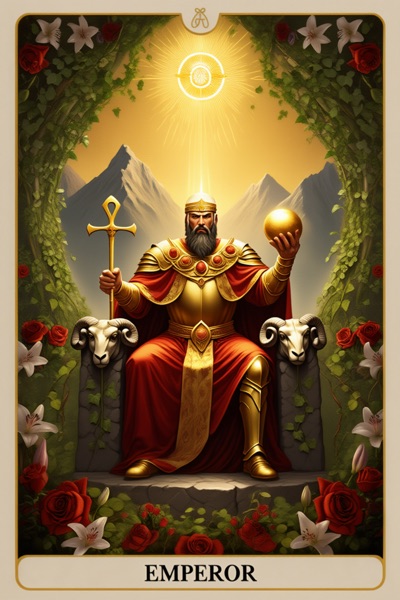
Three things make it spread fast: it needs only a birth date, the arcana are vivid and story-shaped (The Emperor reads better on TikTok than "Saturn trine Mercury"), and the chart is visual. It borrows tarot's alphabet without tarot's randomness — nothing is drawn or shuffled; everything is computed.
What Western astrology is
Western tropical astrology maps the sky at your exact birth moment — date, time, and place — onto a wheel of twelve signs and twelve houses, and reads the positions and angles of the Sun, Moon, and planets within them. It is the accumulated practice of roughly two millennia, from Babylonian omen lists through Hellenistic horoscopy to the modern natal chart.
Its resolution is what sets it apart: because it uses the birth moment, two people born on the same day in different cities get meaningfully different charts — different Ascendants, different house placements, often a different Moon sign.
Side by side
| Matrix of Destiny | Western astrology | |
|---|---|---|
| Input required | Birth date only | Date + exact time + place |
| Symbolic alphabet | 22 Major Arcana | Planets, signs, houses, aspects |
| Method | Arithmetic reduction of the date | Astronomical computation (ephemeris) |
| Resolution | Everyone born the same day shares a matrix | Distinguishes births hours apart |
| Age | ~20 years (2000s, Ladini school) | ~2,000 years of documented practice |
| Source texts | Proprietary school materials | Public domain — Ptolemy, Lilly, and centuries more |
| Randomness | None — fully computed | None — fully computed |
| Signature concepts | Karmic tail, chakra table, money/love lines | Ascendant, houses, transits, synastry |
| Learning curve | Hours — one chart, 22 symbols | Years — layered symbol grammar |
Strengths and limits of each
Matrix of Destiny is strong at
- Accessibility — one date, one chart, instantly readable
- Archetypal vividness — the arcana are rich, narrative symbols
- Family patterns — the ancestral-line framing prompts real reflection
- Speed — a full chart fits in one image
Its limits
- Date-only input — no birth-time resolution
- Young system — no centuries of refinement or critique
- Proprietary sources — you can't check the original texts
- Determinism creep — "karmic" framing can read as fatalism
Western astrology is strong at
- Personal resolution — your chart is nearly unique to you
- Documented depth — public sources, two millennia of practice
- Time dynamics — transits and progressions read change, not just character
- Relationship tools — synastry between two full charts
Its limits
- Needs an accurate birth time many people don't have
- Steep learning curve; easy to read badly
- Jargon-heavy — less shareable, less immediate
- No scientific validity — same as every symbolic system
They're answering different questions
The honest way to hold both: the Matrix of Destiny asks "which archetypes does your date carry?" — a numerological question wearing tarot imagery. Western astrology asks "what was the sky doing at your moment?" — an astronomical question wearing mythological imagery. One is not a worse version of the other; they are different instruments pointed at the same person.
That is also why they can disagree without either being "wrong" — and why a theme that shows up in both is worth more attention than anything either says alone. Cross-tradition agreement is the closest thing symbolic systems have to a signal.
Reading them together — a sane protocol
Start with the overlap. Compute your matrix arcana and your natal chart, then look only for themes that appear in both — an Emperor-heavy matrix alongside a strong Saturn or Capricorn emphasis says more than either alone.
Use the matrix for archetypes, astrology for timing. The matrix is static — one image for a lifetime. Astrology's transits give you the moving picture. They complement rather than compete.
Hold both as mirrors, not verdicts. Neither system predicts. Both are structured prompts for self-reflection with long (or in the matrix's case, short) cultural histories. If a reading tells you something is fixed and fated — especially one selling you removal of a "karmic block" — that's a sales technique, not a tradition.