
If you've been recommended one of these products, you've probably been recommended the other. They get bundled in "best astrology apps" listicles all the time. But once you actually use both, the comparison stops making sense. They're not competitors — they're different categories.
This post is the fair side-by-side most listicles don't bother with. Where Co-Star wins, we'll say so. Where Arcana Origin wins, we'll say so. Where one fits your situation and the other doesn't, you'll know.
The Core Difference
Co-Star is a daily companion app. You install it on your phone, you get a push notification each morning ("the Moon enters Cancer today — soften your edges"), you check your transits, you maybe send a friend the compatibility report. It runs on ongoing engagement.
Arcana Origin is a symbolic book. You enter your birth data once, the engine runs your chart through 94 readings drawn from 32 cultural traditions, you receive a complete PDF book of your symbolic portrait. Start one-time at $11, or subscribe monthly if you want fresh readings every cycle. It runs on depth, not frequency.
That's the whole difference. Everything below follows from it.
Feature comparison
| Feature | Co-Star | Arcana Origin |
|---|---|---|
| Primary product | Daily horoscope + transit app | One-time complete birth reading |
| Traditions included | 1 — Western tropical astrology | 94 — across 32 cultures |
| Pricing model | Free + premium chats ($19-$40) | Free trial; $11 one-time; $33/mo; $88/mo |
| Subscription required | No (chats are pay-per-use) | Optional — Seeker tier is one-time |
| Source data | NASA JPL ephemeris | Public-domain texts + ephemeris |
| Output format | App notifications, in-app screens | Web reading + PDF book export |
| AI-generated content | Yes, daily push notifications | No — traditional rule-based synthesis |
| Compatibility / synastry | Yes — between two Co-Star users | Yes — at Master and Practitioner tiers |
| Vedic / Jyotish | No | Yes |
| Chinese Bazi | No | Yes |
| Mayan / Aztec / Egyptian | No | Yes — all three |
| I Ching / Geomancy / Ifa | No | Yes — all three |
| Numerology | No | Yes — Pythagorean + Chaldean + Kabbalistic |
| Platform | iOS + Android | Web (iOS app coming) |
| Account required | Yes — phone-number sign-in | No for purchase; account optional |
| Privacy | Stores location + push tokens | Birth datum only; account optional |




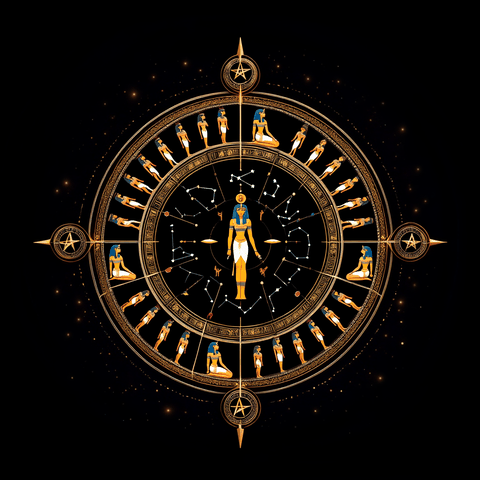




 Ten of the ninety-four traditions in every Arcana reading
Where Co-Star wins
Co-Star strengths
- Free to start — no commitment
- Daily engagement loop — keeps astrology in your routine
- Beautiful, minimal UI — set the design bar for the category
- Social compatibility comparisons with friends
- Voice notes from real astrologers in premium chat
- Massive user base — over 30 million app downloads as of 2024 per Sensor Tower
Co-Star limitations
- Single tradition — Western tropical astrology only
- Daily content is AI-generated with mixed reviews on accuracy
- Premium chat is expensive at $19-$40 per session
- No PDF or downloadable record of your chart
- Push notifications can become noise over time
- App-only — no web or shareable URL for your chart
Where Arcana Origin wins
Arcana Origin strengths
- 94 traditions, not 1 — Vedic, Mayan, Bazi, I Ching, numerology, more
- The Convergence layer — surfaces themes when 3+ traditions agree
- Entry tier is a one-time $11 — subscriptions optional, cancel anytime
- PDF book export included from the $11 tier — keep your reading forever
- No AI-generated daily horoscope feed
- Account-optional — pay and read without signing up
- Methodology is publicly documented at /methodology.html
Arcana Origin limitations
- No daily push notifications or transit updates
- No social compatibility comparisons with friends (yet)
- Web-only at launch — iOS app in development
- Smaller user base — launched May 2026
- No real-human astrologer chat option
- One-time depth, not ongoing companionship
Who each is for
Pick Co-Star if
You want a daily astrology companion in your pocket. You're comfortable with Western tropical astrology only. You enjoy push notifications and casual social comparisons with friends. You'd rather pay nothing upfront and occasionally pay for a chat than commit to a one-time purchase. You're on iOS or Android and want a polished mobile experience.
Pick Arcana Origin if
You want one deep reading rather than a daily stream. You're curious how Vedic, Mayan, Bazi, or I Ching describe you in addition to Western astrology. You want a downloadable PDF book to keep. You want the option of a one-time purchase instead of being forced into a subscription. You care about the methodology being open and the sources being public-domain texts rather than proprietary algorithms. You don't want yet another notification on your phone.
Use both if
Honestly, this is the right answer for a lot of people. Co-Star handles the daily texture of "what's the sky doing right now." Arcana Origin handles the deep one-time portrait of "who am I across multiple traditions." They don't conflict — they complement.
Pricing breakdown
| Cost over 1 year | Co-Star | Arcana Origin |
|---|---|---|
| Light user | $0 (free app, no chats) | $0 free trial, or $11 Seeker one-time (7 readings) |
| Moderate user | $57-$120 (3 premium chats) | $33 — one month of Master (20 readings), cancel anytime |
| Heavy user | $228+ (12 chats/year) | $88/mo Practitioner (unlimited readings + Oracle) |
Co-Star is cheaper at zero engagement and more expensive per interaction at high engagement. Arcana Origin's Seeker tier is a one-time cost you keep forever; the monthly tiers are for people who want new readings and Oracle conversations every cycle.
What this comparison doesn't cover
Neither product is scientifically validated. Astrology is not a predictive science. Co-Star explicitly markets itself as entertainment. Arcana Origin frames the 94 traditions as cultural symbolic systems with documented histories — not as predictive instruments. If you're looking for medical, psychological, or financial advice, neither product is appropriate.
If you're looking for self-reflection, pattern recognition across cultural lenses, or the experience of seeing your birth chart through traditions older than most modern countries — that's what these products do, with different design choices.